Quick Answer
Match the refresh rate to the job: 60-75 Hz for office and browsing, 120 Hz for console gaming (PS5 / Xbox Series X 120fps modes), 144 Hz for mainstream PC gaming, and 240 Hz and up for competitive esports. The biggest perceived jump is from 60 Hz to 144 Hz; gains above 240 Hz are subtle and require a powerful GPU. Frame time is simply 1000 / Hz, so 60 Hz = 16.67 ms and 240 Hz = 4.17 ms.
What to test, and what to replace it with
These tools exist to tell you whether a screen is worth keeping. If it is not, these are the panels worth running the same tests on instead.
 LG C4 65 in OLED evo
The panel most of these test patterns are written against. OLED is where the dead-pixel and uniformity tests actually matter.
Check price on Amazon → Samsung S90F 65 in OLED
The main alternative to the C4 at the same size, and the one worth running the same tests on before you keep it.
Check price on Amazon →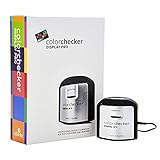 Calibrite Display Pro Colorimeter
Test patterns tell you something is wrong. A colorimeter tells you by how much, and fixes it.
Check price on Amazon → Dell UltraSharp U2722D
The safe QHD desk monitor when a test turns up a panel you do not want to keep.
Check price on Amazon →As an Amazon Associate we earn from qualifying purchases, at no extra cost to you. Prices change, so check before buying.
Refresh Rate Reference Chart
| Refresh Rate | Frame Time | Best For | Typical GPU Need | Notes |
|---|---|---|---|---|
| 60 Hz | 16.67 ms | Office, browsing, some console, budget | Any GPU | Baseline; standard for non-gaming displays |
| 75 Hz | 13.33 ms | Light upgrade, office + casual | Entry | Minor smoothness gain over 60 Hz |
| 120 Hz | 8.33 ms | Console gaming (PS5 / Xbox Series X 120fps), smooth desktop | Mid-range GPU | Sweet spot for consoles |
| 144 Hz | 6.94 ms | PC gaming standard, esports entry | Mid / high GPU | Most popular gaming refresh rate |
| 165 Hz | 6.06 ms | Common overclock of 144 Hz panels | High GPU | Marginal gain over 144 Hz |
| 240 Hz | 4.17 ms | Competitive FPS, esports | High-end GPU | Clear motion clarity gain |
| 360 Hz | 2.78 ms | Pro / competitive esports | Top-tier GPU + low settings | Diminishing returns for most players |
| 500 Hz | 2.0 ms | Elite competitive (CS2 / Valorant pros) | Flagship GPU | Niche; for the highest-level play |
Frame time is the interval between frames, calculated as 1000 / refresh rate in Hz. This is a mathematical fact, not a measured spec.
Why Higher Hz Has Diminishing Returns
Smoothness gains are logarithmic
Each doubling of refresh rate roughly halves the frame time, but the perceived benefit shrinks as the numbers climb:
- ✓60 → 144 Hz: Frame time drops from 16.67 ms to 6.94 ms. Huge, obvious difference.
- ✓144 → 240 Hz: 6.94 ms to 4.17 ms. Noticeable to gamers, clear in fast motion.
- ●240 → 360 Hz: 4.17 ms to 2.78 ms. Subtle for most people.
- ●360 → 500 Hz: 2.78 ms to 2.0 ms. Only the most trained eyes notice.
Two things that gate the benefit
- ✗You need the frames to match: A 240 Hz panel fed only 100 fps cannot look like 240 Hz. Your GPU must actually render frames at the display's rate.
- ✓Adaptive sync helps: G-Sync and FreeSync match the display refresh rate to your real frame rate, removing tearing and stutter when frame rates fluctuate.
Bottom line: buy the refresh rate your GPU can feed in the games you play. A high number on the box does nothing if the frames are not there.
Best Refresh Rate by Use Case
Office, browsing, productivity
60-75 Hz is all you need. Scrolling and window movement feel slightly smoother at 75 Hz, but neither requires a dedicated GPU.
Console gaming (PS5 / Xbox Series X)
120 Hz is the target. Consoles cap at 120fps in supported titles, so pair a 120 Hz display with an HDMI 2.1 connection. Higher refresh rates give no console benefit.
Mainstream PC gaming
144 Hz (or 165 Hz) is the standard. It is the best balance of smoothness, GPU demand, and price, and the most common gaming spec.
Competitive FPS / esports
240 Hz for serious competitive players, with a high-end GPU. The motion-clarity gain over 144 Hz is real in fast aim duels.
Pro / elite esports
360 Hz or 500 Hz for the top tier of CS2, Valorant, and similar titles. Expect diminishing returns and the need for a flagship GPU plus reduced graphics settings to hit the frame rates.
Frequently Asked Questions
For office work and browsing, 60 to 75 Hz is fine. For console gaming, 120 Hz unlocks the 120fps modes on PS5 and Xbox Series X. For PC gaming, 144 Hz is the popular standard, while 240 Hz and above is aimed at competitive esports players. Most people see the biggest jump going from 60 Hz to 144 Hz; gains above 240 Hz are subtle.
Frame time in milliseconds equals 1000 divided by the refresh rate in Hz. For example, 1000 / 60 = 16.67 ms, 1000 / 144 = 6.94 ms, and 1000 / 240 = 4.17 ms. Frame time is the interval between each new image, so a higher refresh rate means a shorter frame time and smoother motion.
For competitive FPS players, yes: 240 Hz cuts frame time from 6.94 ms to 4.17 ms and gives a clear improvement in motion clarity. For casual or single-player gaming the difference is much smaller, and you need a high-end GPU that can consistently push 240 frames per second to feel the benefit.
Only for elite competitive players. Perceived smoothness gains are logarithmic, so the jump from 240 to 360 Hz (and from 360 to 500 Hz) is subtle for most people. These rates also demand a flagship GPU and low graphics settings to reliably hit the required frame rates, making them niche choices.
120 Hz is the sweet spot for consoles. The PS5 and Xbox Series X support 120fps modes in select games, and a 120 Hz monitor or TV with HDMI 2.1 lets you take full advantage of them. Going above 120 Hz provides no benefit on current consoles.
Yes. A high refresh rate only helps if your GPU can render frames fast enough to fill it. A 240 Hz monitor fed only 100fps will not look like 240 Hz. Adaptive sync technologies like G-Sync and FreeSync help by matching the display's refresh rate to your actual frame rate, eliminating tearing and stutter.
Affiliate Disclosure: This page contains affiliate links. We may earn a commission if you purchase through these links at no additional cost to you. We recommend products based on published specifications and verified owner reviews rather than hands-on testing.